
England's first licensed seaweed harvesters, hand-cutting organic dulse, kelp and sea greens from the Lizard Peninsula since 2012.
Location: Helston, Cornwall
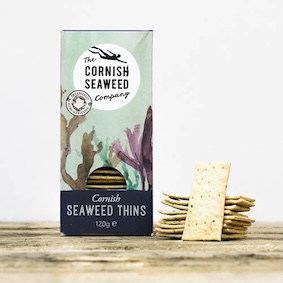
Featured Products:
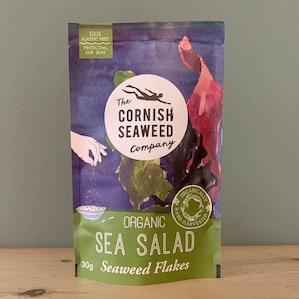
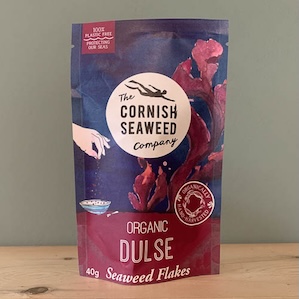
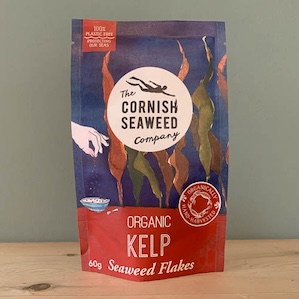
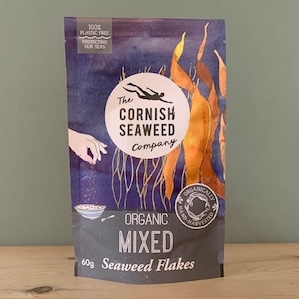
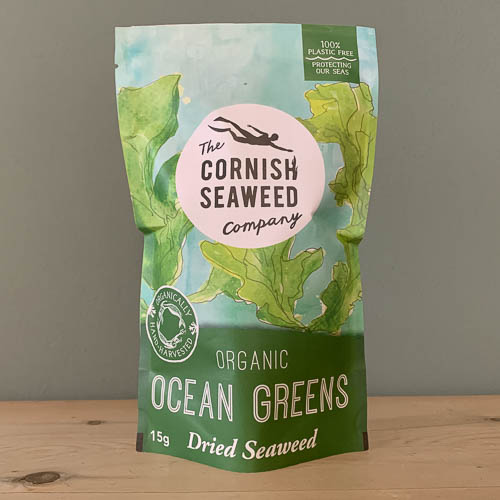
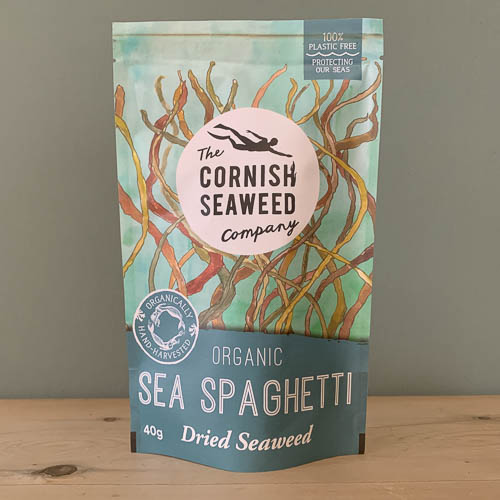
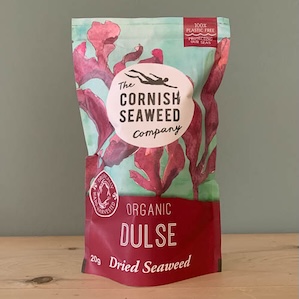
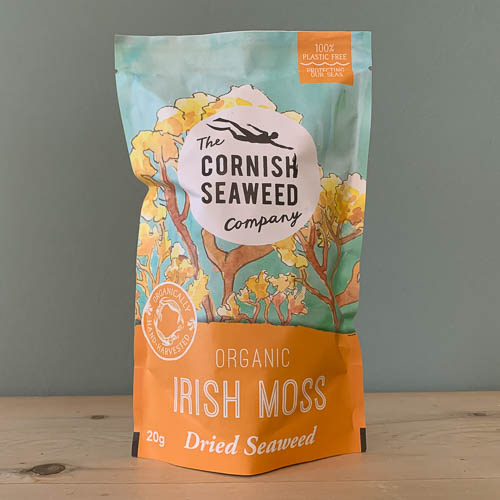
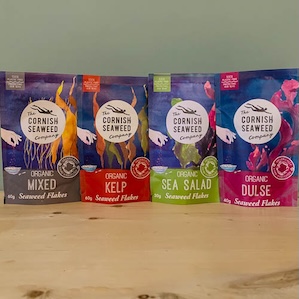
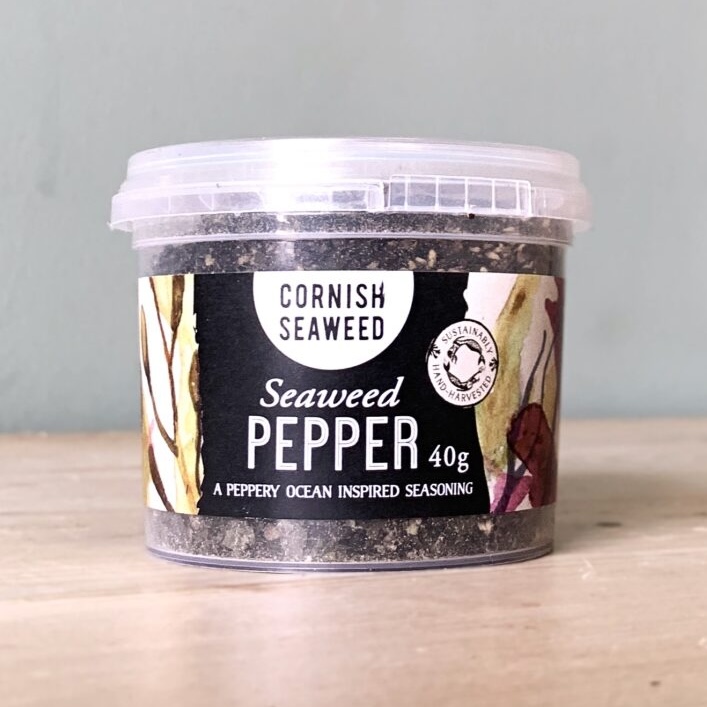
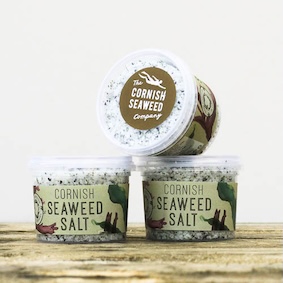
Free UK Delivery Over £25
Our Story
The Cornish Seaweed Company started with a radio programme. Caro Warwick-Evans, a renewable energy engineer, heard a piece on Radio 4's Farming Today about the seaweed industry in Ireland and couldn't understand why nobody was doing the same in England. She put the idea to her friend Tim van Berkel, a conservationist with a background in remote ecosystem research, and in 2012 the two of them founded the business on the Lizard Peninsula in Cornwall.
Neither of them had a seaweed background. What they had was a shared love of the sea and a conviction that a resource growing untouched along the shoreline shouldn't go to waste, especially one so rich in iodine, iron and other minerals. Because no one had harvested wild seaweed commercially in England before, there was no rulebook to follow. Caro and Tim spent their early months working with Natural England to write one, establishing the Code of Conduct for Seaweed Harvesting that now underpins licensed harvesting across the country.
That pioneering status has stuck. The company became the first to hold a licence to harvest seaweed from Cornwall Council and the Crown Estate, and in 2017 it opened England's first seaweed farm, working with the University of Exeter and the Marine Biological Association to study regrowth rates and sustainable harvest volumes.
Meet The Team
Caro, Co-founder
Caro studied Renewable Energy Engineering at Exeter, graduating with first class honours, and went on to install renewable energy systems in Indonesian Borneo, Peru and the Philippines for organisations including Engineers Without Borders. A serious motor accident brought her back to Cornwall, where a BBC Radio 4 programme set her on a different path. An avid surfer and self-described ocean junkie, she still spends her working days in the water she grew up loving.
Tim, Co-founder
Tim grew up in the Netherlands and has spent his career drawn to wild places, leading conservation projects around the world. Cornwall's coastline and surf eventually became home. He combines seaweed harvesting with running the coastal path, snorkelling and foraging, describing the work as bringing together everything he loves about being outdoors.

How It's Made
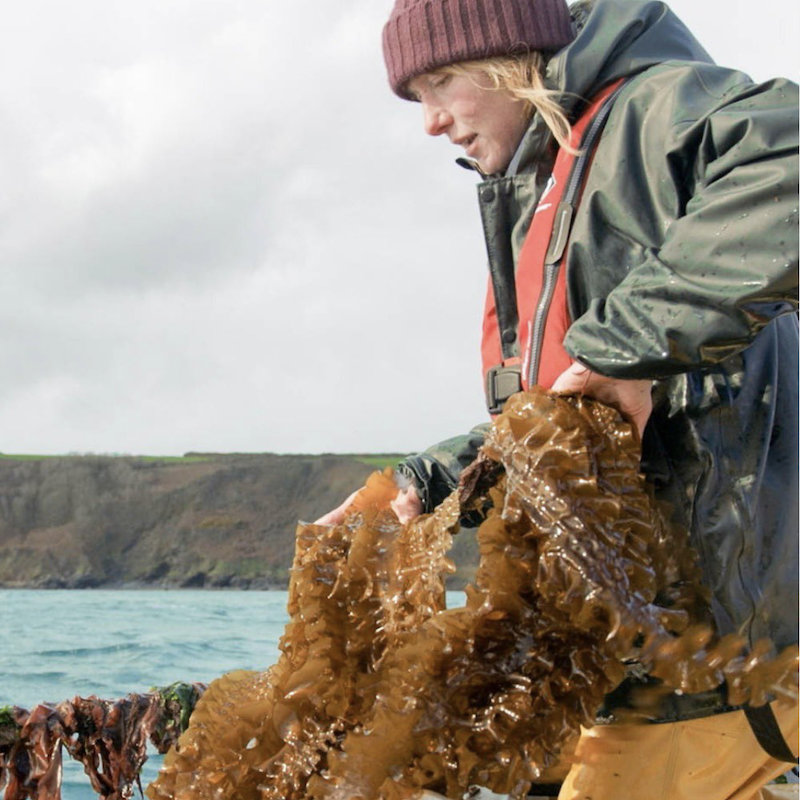
All of the seaweed is hand-cut with scissors from wild beds along the Lizard Peninsula. The team works to the tides and the seasons rather than a fixed schedule, harvesting only when conditions and growth stages allow it.
The method is often described as giving the seaweed a haircut. Only part of each plant is cut, above the point of growth, so it regrows naturally rather than being pulled from the rocks. Harvesting takes place during the active growing season to allow quicker recovery, and areas are rotated and left alone for up to several years at a time depending on the species, so the same patch of shore is never worked to exhaustion.
Harvesting only happens in Shellfish Classification A or B waters, tested and monitored by the Port Health Authority for pollutants and bacteria. If a site falls below standard, harvesting there stops until it recovers. Once harvested, the seaweed is dried using traditional methods over several days, then tested in independent accredited laboratories for heavy metals, pollutants and microbial contaminants before it's packed.
Sustainability
The Cornish Seaweed Company was among the first businesses of its kind in England, which meant there was no established sustainability standard to follow when it started. Working with Natural England, the founders helped write the Code of Conduct for Seaweed Harvesting that now governs licensed harvesting nationally.
The business holds a full harvesting licence from Cornwall Council and the Crown Estate, with sustainability approval from Natural England built into that licence. It is certified organic by the Soil Association and adheres to MSC environmental standards for sustainable seaweed harvesting.
Five principles sit behind everything the business does on the shore: maintaining the productive capacity of wild seaweed populations for long-term use, protecting the wider ecosystem and habitat the seaweed supports, running an effective management system that respects local and national law, operating in a socially responsible way, and minimising impact on other nearby farms, activities and communities.
Seaweed itself is a naturally low-impact crop. It needs no fertiliser, no pesticide and no fresh water to grow, and it plays a role in sequestering carbon along the coastline it's harvested from.
FAQs
Which seaweed is the most popular?
Dulse. It has a rich, savoury flavour often compared to smoky bacon or dried mushrooms, and is high in protein and iron. It works raw, cooked or dried, in soups, salads, stir-fries or as a crispy snack. Kelp (also known as kombu), sea spaghetti and sea lettuce are also available, each with its own texture and flavour.
Is the water safe where your seaweed is harvested?
Yes. All seaweed is hand-harvested from Shellfish Classification A or B waters, regularly tested by the Port Health Authority for pollutants, bacteria and contaminants. If an area doesn't meet standard, harvesting there stops until it's safe again. The seaweed itself is also tested independently for heavy metals, pollutants and microbial contaminants.
Does seaweed absorb pollutants from the water?
Seaweed absorbs nutrients such as nitrates and phosphates as it grows, which is part of how it grows so efficiently without fertiliser. Unlike shellfish, it doesn't accumulate the toxins linked to harmful algal blooms, and by taking up excess nutrients it actually helps reduce the risk of them forming. All seaweed is lab-tested and safe for human consumption.
Do you wild harvest or farm your seaweed?
Both. The majority is sustainably wild harvested by hand along the Lizard Peninsula, allowing it to regrow naturally without damaging the marine environment. In 2017 the company also opened England's first seaweed farm, working with the University of Exeter and the Marine Biological Association.
Is it organic?
Yes, all seaweed is certified organic by the Soil Association, covering harvesting locations, processing methods, environmental sustainability, and water and product safety.